
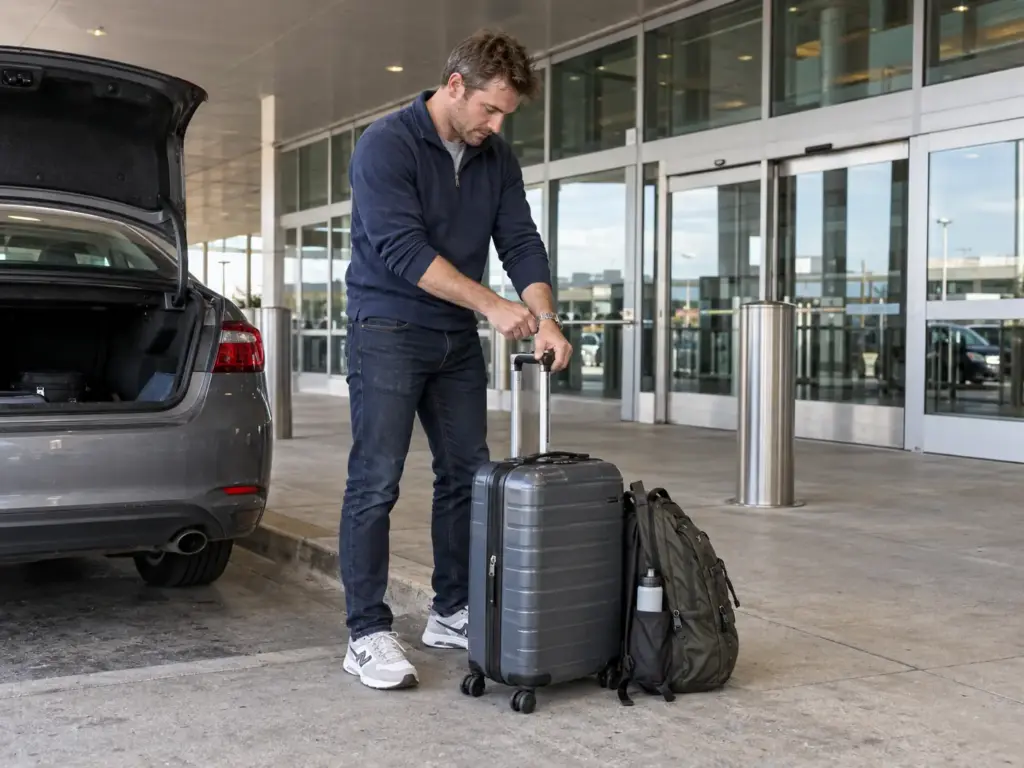
The tag on the handle says “carry-on size,” and the tag isn’t the one measuring. Southwest checks the whole bag, wheels down and handle in place, against 24 × 16 × 10 inches (61 × 41 × 25 cm), which is the answer to what the carry-on size limits are for Southwest Airlines, exactly as its help page printed them on October 30, 2026. A listing usually measures the shell, while the airline measures everything that sticks out of it. So this guide reads Southwest’s pages the way a sizer would, shows what they leave unsaid, and tells you what to do when your bag lands a little over.
Quick Answer
Southwest’s carry-on limit is 24 × 16 × 10 inches (61 × 41 × 25 cm), and wheels, handles and any attachments count toward it. You may bring one carry-on and one personal item. That’s the wording on Southwest’s carry-on page, read October 30, 2026.
The Number Southwest Prints, and What Counts Toward It
The number is short, and Southwest prints it plainly on the carry-on rule Southwest publishes on its own help center. Where bags go wrong is the counting, because the page measures the full bag and most listings measure only the shell.
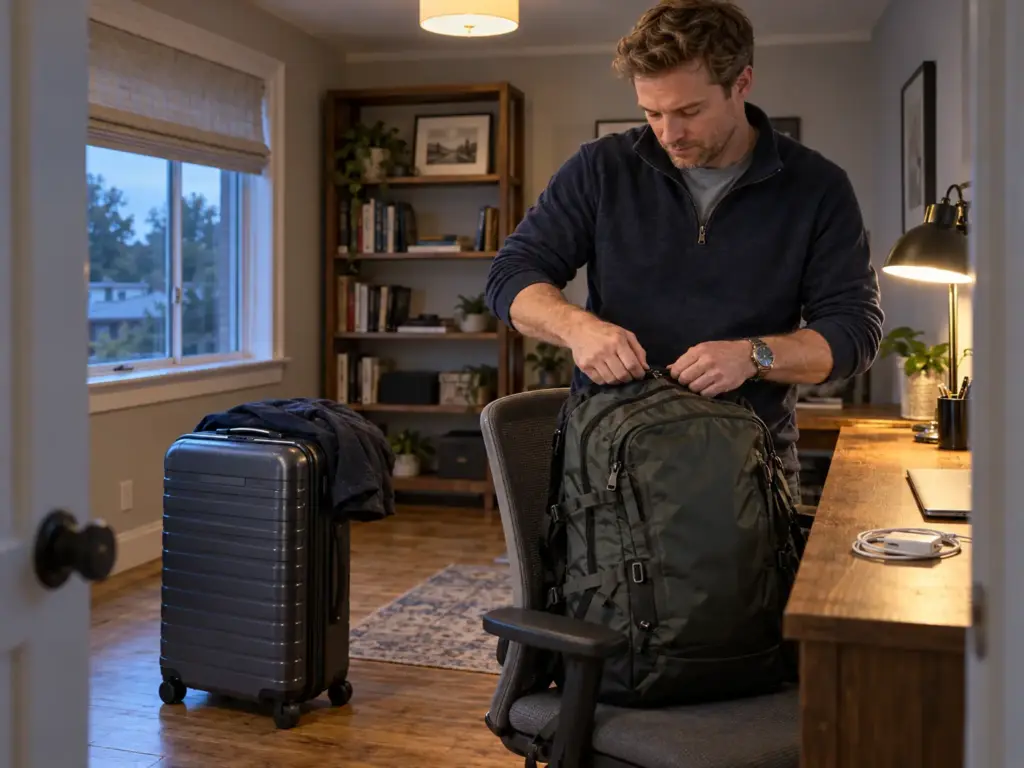
The 24 × 16 × 10 limit in inches and centimeters
As of October 30, 2026, Southwest’s carry-on allowance is 24 inches long, 16 wide and 10 deep, which works out to 61 × 41 × 25 cm, and each passenger may bring one carry-on bag and one personal item. The Southwest carry-on limit is tightest on the 10-inch side. A hardside roller bag with deep wheel housings or a soft bag with a full front pocket is far likelier to bust 10 than 24, so that’s the number to check first.
Other airlines draw a different box, and how the other big carriers compare is laid out in a table on a separate page, so this guide stays on Southwest.
Wheels, handles and attachments are part of the bag
According to Southwest, “Wheels, handles, and any attachments count toward these dimensions.” That one sentence is why a bag sold as carry-on size can still fail. A spinner’s wheel housings stick out below the shell, the base of the telescoping handle sits on top, and a maker’s shell-only figure leaves both out of the long side. Anything clipped or strapped on counts too, like a pouch or a tag holder.
Read the depth on a bag’s spec sheet twice. A listed 9 inches under a 10-inch limit looks safe until a stuffed front pocket adds an inch and the wheels add the rest.
One carry-on, one personal item, and what the fee table says about cost
The help page never uses the word “free,” so the cost comes from the fee table Southwest publishes for optional travel charges. As of the same October 2026 reading, that table lists the carry-on and the personal item as free on every fare row it shows. The fee page also repeats the box as 10 × 16 × 24 without a word about wheels, but the help page is the one that spells out wheels and handles, so plan around it.
Plan for the sizer at a full gate, when the overhead bin space is going fast, rather than hoping nobody looks.
What the Southwest Page Leaves Unsaid
The carry-on section is precise, but the page is silent on the two things people ask about most. Knowing exactly where the printed rule stops saves you from trusting a number that was never Southwest’s.
The personal item: under the seat, and no size printed
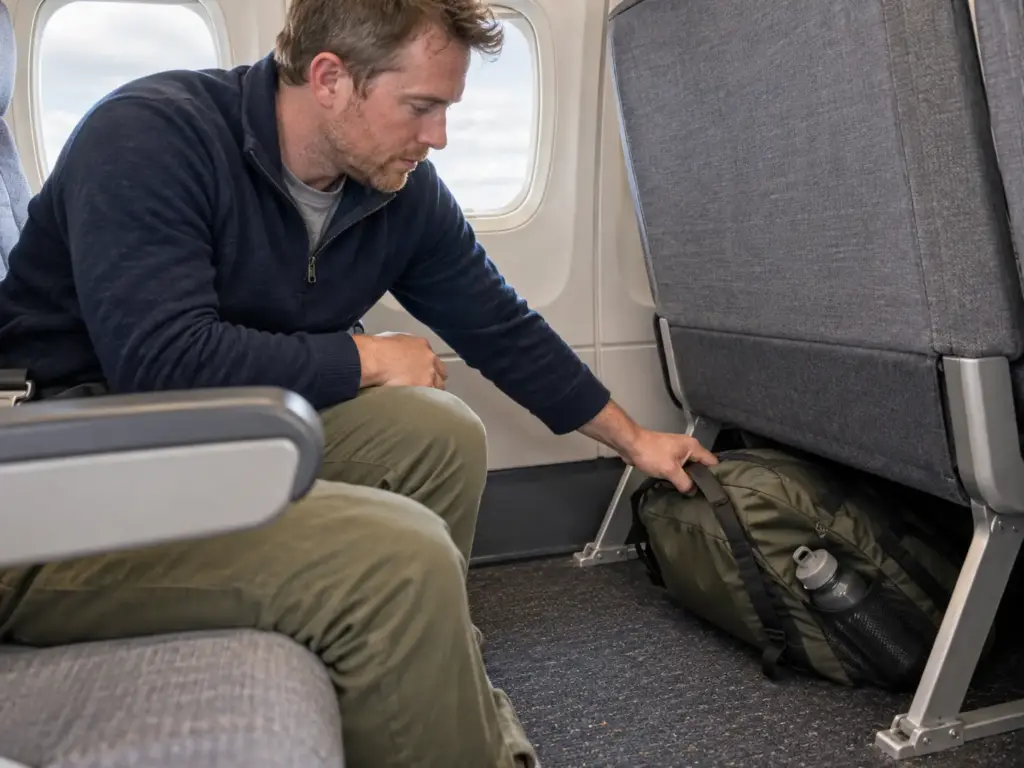
The page says the personal item “goes under the seat in front of you” and gives examples: a purse (crossbody bags included), a briefcase, a laptop case, a backpack, a small camera, a pillow or a blanket. It prints no dimension. That’s the airline’s own gap, and it changes how you check a bag. The seat is the test, not a tape measure, and a bag that has to be forced under the seat is the one that gets you in trouble.
A backpack packed down until it slides under works fine as the personal item, and the other bag goes overhead. Neck pillows don’t count toward the carry-on limit at all, per the same page. And the wording has a built-in puzzle: in a row with no seat in front of you, “under the seat in front of you” has nothing to attach to, and the page doesn’t say what happens then.
Carry-on weight: no figure on the page
Southwest’s carry-on page prints no weight limit, as read on October 30, 2026. A page that prints nothing isn’t the same as a page that says there’s no limit, so treat the weight as unconfirmed. If you’re packing near the edge, it’s worth knowing why weight limits exist at all, because other carriers do set them and you may be on one of those for a leg.
Why the numbers from other sites do not match
Search a few travel sites and you’ll see personal-item sizes that disagree, and one site even swaps two of the three numbers. Southwest’s page gives no such size, so a number like that belongs to whoever printed it.
Another figure gets repeated as the Southwest carry-on size: 22 × 14 × 9 inches. That’s a common size on bag listings, and it sits comfortably inside Southwest’s 24 × 16 × 10, but it isn’t the line on Southwest’s page. If a figure doesn’t come from the airline’s own page, treat it as someone’s guess.
Measure the Bag You Already Own, Packed
Once you know the number and that the wheels count, the free move is a tape measure at home, before any new bag. Most bags that fail were never measured with the wheels on.
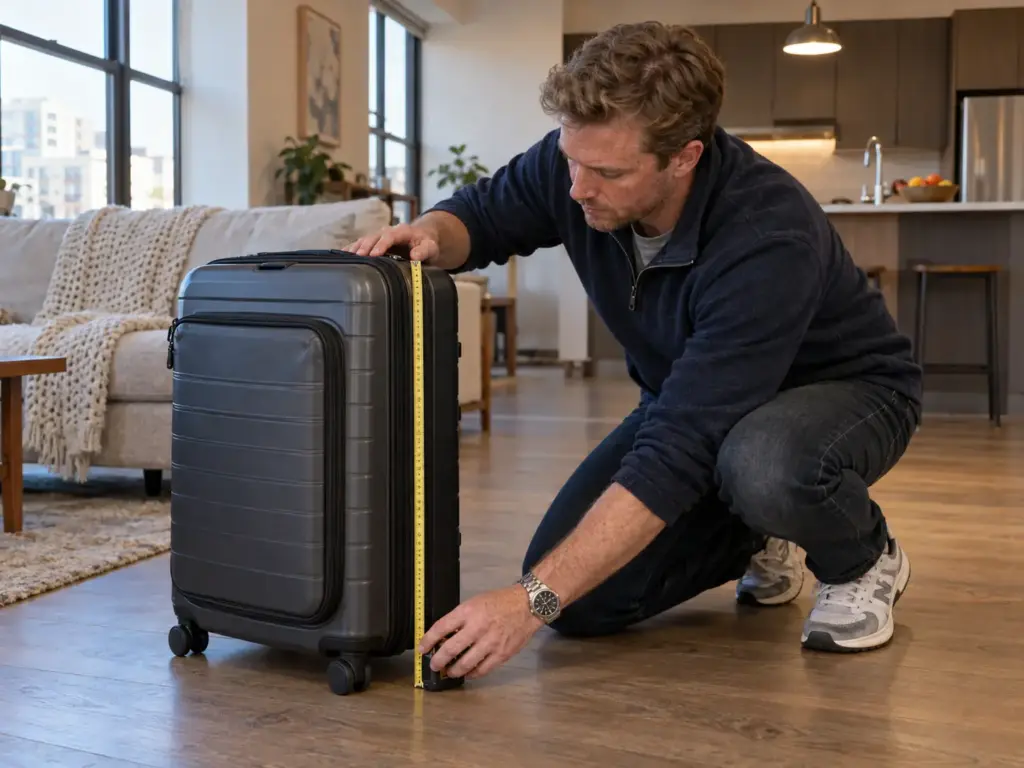
Measure the three sides, wheels on and handle down
Stand the bag upright on a hard floor with the handle pushed all the way down, and measure the tallest point, the widest point and the deepest point. Measure the long side from the floor to the top of the handle housing, and the other two where the shell bulges most. Then compare each to 24, 16 and 10.
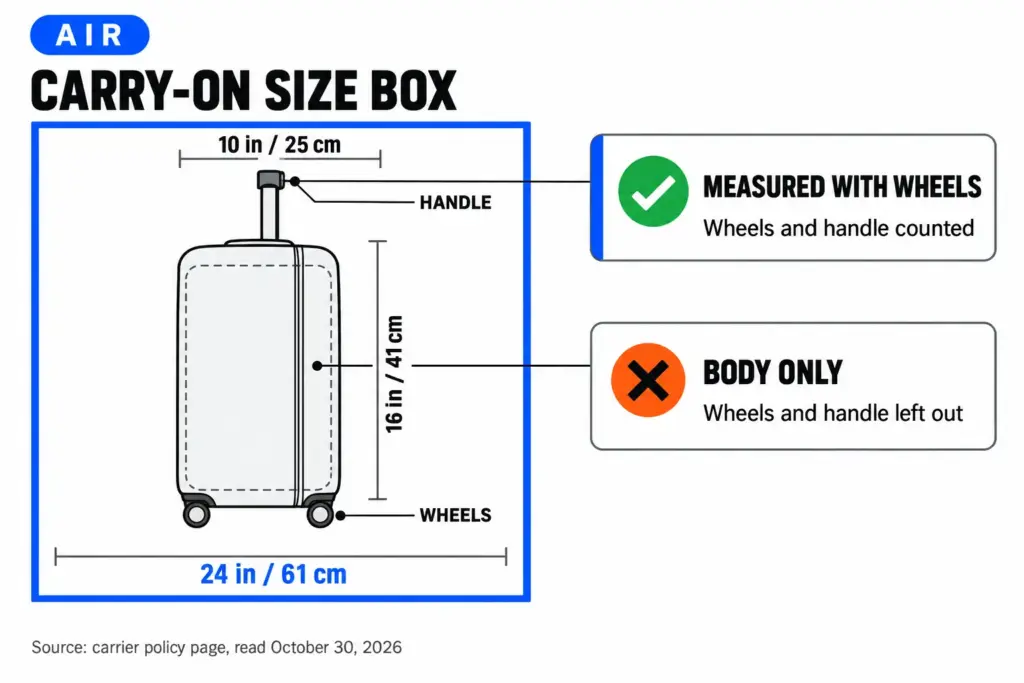
Pack first, then measure
An empty bag passes and a packed one doesn’t, so measure packed: fill it for the trip and run the tape then. A full front pocket counts, and so does the bulge at the zipper line. If it’s over, take out whatever pushes the front pocket and measure again, and only after that think about the counter.
The tape is cheap and the bag you own is free, which beats any purchase. To see the whole method across sizes, there’s how to check whether a bag is over before you leave home.
Clip on every pouch and tag holder you plan to travel with before you pick up the tape, since attachments are part of the measurement Southwest counts.
When it is a hair over
A bag that’s half an inch past 10 is still a bag past 10, because the page prints no tolerance. Slimming the front pocket usually buys that half inch.
If your bag has an expansion zipper, measure it at the setting you’ll actually travel with. Southwest’s page doesn’t mention expansion, so there’s no airline answer to lean on, only the tape. There’s more on what happens when a bag is only a little over.
If It Is Too Big: The Ticket Counter, Not the Gate
A bag over the box isn’t the end of the trip. Southwest names a place to fix it, and that place isn’t the gate.
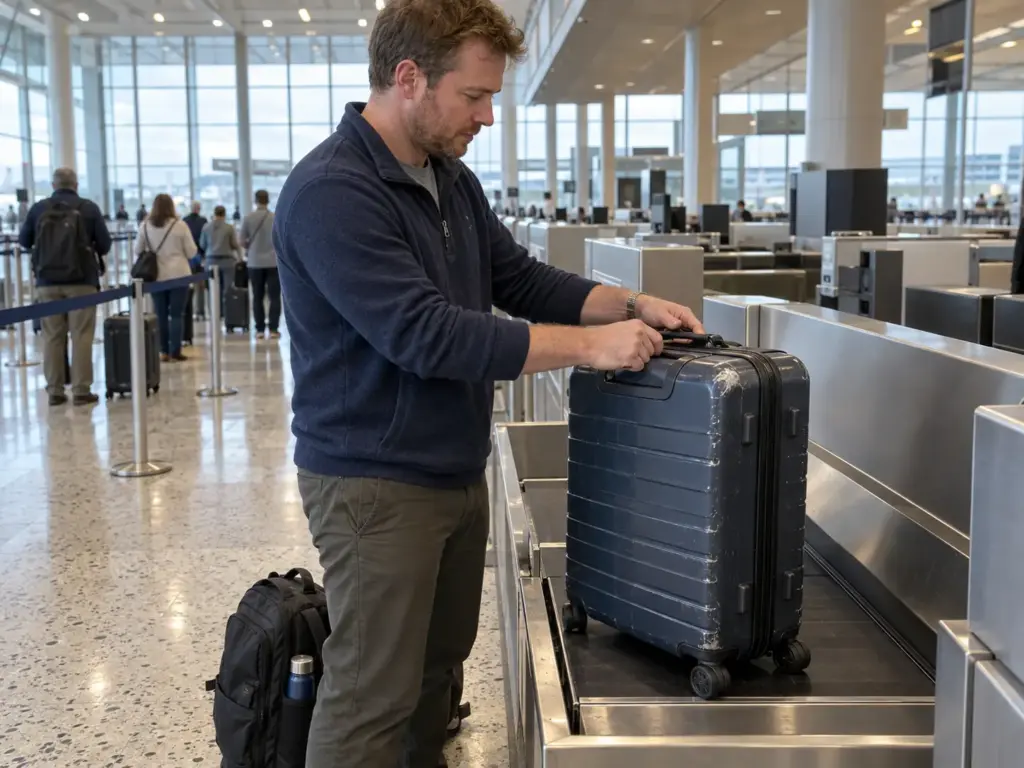
Check it at the ticket counter before the gate
The page says to check items too large to carry on, or more than one carry-on or personal item, at the ticket counter before you head to the departure gate. That’s the owner’s order of operations, so follow it. Picture the gate when the bins fill: an agent measures with the sizer, and the passenger who handled it at the counter an hour earlier isn’t standing there. For the full picture of the airport side, see what happens to an oversized carry-on at the airport.
The checked-bag limits: 62 inches and 50 pounds
Southwest’s checked-bag size limit is 62 linear inches, found by adding length, width and height, with wheels and handles included, and each bag can weigh up to 50 pounds (23 kg). That’s 158 cm for the three sides combined. A checked bag a couple of inches past 62 is where the surprise fee shows up, because the tape at the counter reads it as oversize.
Add up the three sides of a bag you’re about to check. At 63 inches (160 cm) it leaves the standard fee behind and enters the $200 oversize band in the table below.
What it costs, by bag and by weight
Here are the numbers from the fee table Southwest publishes for optional travel charges, read October 30, 2026. The fees below apply to tickets booked or changed on or after April 9, 2026, on Basic, Choice and Choice Preferred fares, so a basic fare doesn’t change the numbers below. Tickets booked before that date use the earlier table, with $35 for the first bag and $45 for the second. Status-based bag benefits sit on the fee page too, and the page header points to a Rapid Rewards change on January 1, 2027, so check it for your own fare.
| Bag | Size or weight rule | Cost (tickets booked or changed on or after April 9, 2026) | Source |
|---|---|---|---|
| Carry-on | 24 × 16 × 10 in (61 × 41 × 25 cm), wheels and handles counted | Free | Carry-on page and fee page |
| Personal item | Under the seat in front of you, no size printed | Free | Carry-on page and fee page |
| First checked bag | Up to 62 in (158 cm), 50 lb (23 kg) | $45 | Checked-bag page and fee page |
| Second checked bag | Up to 62 in (158 cm), 50 lb (23 kg) | $55 | Fee page |
| Third and further bags | Same size and weight | $150 | Fee page |
| Oversized | 63 to 80 in (160 to 203 cm) | $200 plus the standard fee | Fee page |
| Overweight | 51 to 70 lb (23 to 32 kg) | $100 plus the standard fee | Fee page |
| Overweight | 71 to 100 lb (32 to 45 kg) | $200 plus the standard fee | Fee page |
Sizes and fees are Southwest’s own, from its carry-on, checked-bag and optional-fee pages, read October 30, 2026. Fees depend on the ticket date and the fare.
Carry-Ons Whose Listed Size Leaves Room Under the Limit
If the bag you own can’t get under 24 × 16 × 10 even after repacking, the next question is which bags list an exterior size, wheels and handles included, that leaves room. A listing that says “airline approved” isn’t a measurement. The exterior size is.
How these two were chosen
We picked them by checking four things: Southwest’s own limit, the maker’s listed exterior size with wheels and handles counted, the warranty terms, and whether a size was published for the bag when expanded. Both bags come in well inside the box when closed. Whether wheels and handles count on other airlines too matters if your trip has more than one carrier, because a bag built to Southwest’s maximum isn’t a bag for every airline.
A hardside spinner with a fixed 35 L shell (HULSIN)
The HULSIN 20 inch hardside carry-on lists 22 × 14 × 9 inches (56 × 36 × 23 cm) including wheels and handles. That leaves 2 inches of margin on the length, 2 on the width and 1 on the depth against Southwest’s box. It weighs 6 lb (2.7 kg), holds 35 L, and the listing states a 10-year warranty that covers the shell, wheels, handles and TSA lock under normal airline handling. Its limits are plain: the shell is fixed at 35 L with no expansion, and the size is the listing’s figure alone, with a title that says “20-Inch” and a size line that says 22 × 14 × 9, so read that size line on the page before you order.
A softer-sided spinner that expands (BAGSMART)
The BAGSMART 20 inch expandable spinner lists a closed size of 22 × 15 × 9 inches (56 × 38 × 23 cm) in its spec table, though the title says 22 × 14 × 9. Closed, it’s inside 24 × 16 × 10 either way. It weighs 6.83 lb (3.1 kg), holds 35 L, grows by 1.6 inches (4 cm) to 42 L when expanded, and carries a lifetime manufacturer’s warranty according to the listing.
The maker doesn’t publish the expanded size, so the zipper can’t be judged against the limit. Measure the bag with the zipper at the setting you’ll travel with, and don’t assume the closed number holds once it’s open. That’s the usual catch with a softside bag that expands.
When the Trip Changes the Answer: Partner Flights, a Pet Carrier, the Next Rule Change
Everything above assumes a plain Southwest flight with nothing else along, and three things on the owner’s page bend that.
Partner airlines can use different numbers
The page says that if your itinerary includes a partner airline, their carry-on and personal item guidelines may differ. So for that leg, Southwest’s number doesn’t apply, and you measure against the partner’s page. If you’re comparing carriers anyway, here are United’s carry-on limit and Delta’s. A trip is only as permissive as its strictest leg.
A pet carrier takes one of your two slots
Southwest’s page says a pet carrier counts as either your carry-on bag or your personal item. A traveler with a carrier and a roller picks which slot the carrier uses, and the other bag has to fit the slot that’s left. A carrier under the seat means the roller goes overhead and must measure under the box. Anything about the animal itself belongs to the airline and your veterinarian.
Check the page again before you fly
The page header says “A more rewarding journey starts January 1, 2027.” Status-based bag benefits may change with it, and the carry-on rule shown here is the one read on October 30, 2026. Open the page for your fare before you travel, since limits change.
Measure the Packed Bag Tonight, Then Check the Personal Item
The number to remember is 24 × 16 × 10 inches with wheels, handles and attachments counted. The personal item and the carry-on weight have no printed size or figure, and a bag that’s over goes to the ticket counter before the gate, never to the gate itself. Before your next booking, open Southwest’s page again, because its header already points to a change in January 2027, and give the wheels and zippers a look after the trip. Tonight, pack the bag, put it on the floor with the handle down and run the tape, then do the same for your under-seat bag, which is the other half of the pair, the Southwest personal item.
Frequently Asked Questions
01Can I take a backpack and a carry-on bag on Southwest?
Yes. Southwest lets you bring one carry-on bag and one personal item, and its own page lists a backpack as a personal-item example. The personal item goes under the seat in front of you (carry-on page, read October 30, 2026).
02What if my carry-on is one inch too big on Southwest?
The page prints no tolerance, and wheels, handles and attachments count toward 24 × 16 × 10 inches. Southwest says to check oversized items at the ticket counter before the gate, where a bag up to 62 inches and 50 pounds can go in the hold for the fee in the table above.
03Does a crossbody purse count as a carry-on?
No. Southwest’s page lists a purse, crossbody bags included, as an example of a personal item, which goes under the seat in front of you (carry-on page, read October 30, 2026).
04Does Southwest charge for a carry-on bag?
Not on any fare row of the fee table Southwest publishes: carry-on and personal item are listed as free (fee page, read October 30, 2026). Checked bags carry the fees shown above.
05Is there a weight limit for a Southwest carry-on?
Southwest’s carry-on page prints no weight figure (read October 30, 2026). Its checked-bag page sets 50 pounds per bag.
Leave a comment